
How RNAi Therapeutics Work?
Harnessing the Power of siRNA to Silence Genes
RNA interference (RNAi) is a natural cellular mechanism that regulates gene expression by silencing specific messenger RNA (mRNA) molecules. Scientists have harnessed this process using small interfering RNA (siRNA) to target and silence disease-causing genes involved in conditions such as cancer, viral infections, and genetic disorders.
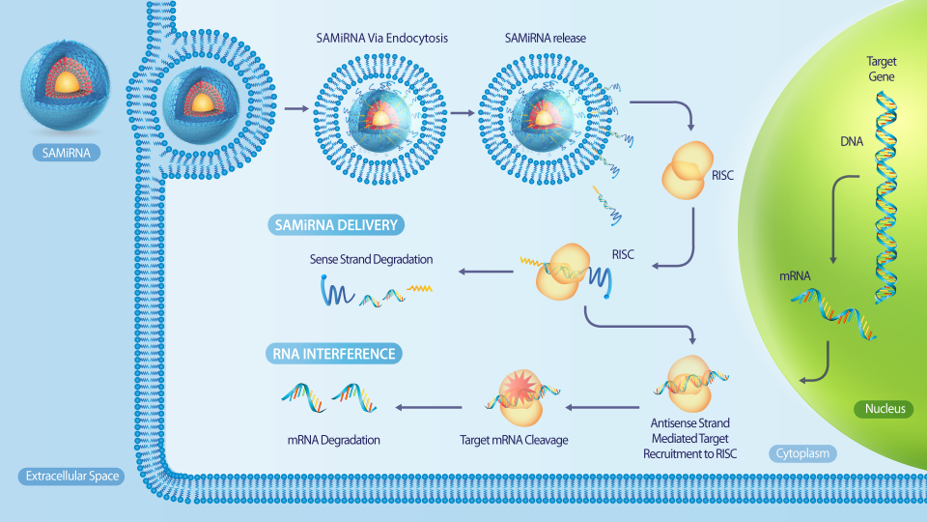
Synthetic siRNA molecules are introduced into the cell. Each siRNA is carefully designed to match the sequence of a specific target mRNA.
Inside the cell, the siRNA is loaded into a protein complex known as the RNA-induced silencing complex (RISC), which plays a central role in RNAi.
Guided by the siRNA, RISC locates and binds to the complementary mRNA. The complex then cleaves the mRNA, thereby preventing it from being translated into a protein.
This cleavage effectively silences the target gene, blocking the production of the associated protein and reducing its harmful effects on the body.
By specifically targeting the root genetic cause, siRNA-based therapies offer a precise and efficient approach to treating previously hard-to-target conditions.